An Automatic Cattle Injector delivers measured doses of vaccines or other prescribed animal-health products through a repeatable injection process. It is commonly used when cattle need to be treated in groups, such as during scheduled herd-health work. The operator sets the dose and follows the product instructions and veterinary guidance. Small details matter: a clean needle, a steady grip, and the correct injection site.
The USDA APHIS report Beef Cow-Calf Management Practices in the United States, 2017, documents health-management practices on U.S. cattle operations. The industry’s 2016 National Beef Quality Audit also assessed injection-site damage, showing why administration technique matters alongside treatment choice. These reports do not establish that an automatic device guarantees better outcomes. Proper calibration, maintenance, animal restraint, and staff training remain essential. A tool can improve consistency, but it cannot replace sound judgment.
Animal-handling expert Temple Grandin’s guidance can be condensed into a practical reminder: “Give cattle a calm, visible path.” That is a summary, not a verbatim quotation. Calm handling helps make treatment more controlled for both cattle and handlers. No machine removes every risk. Readers should consider the injector’s dose range, cleaning requirements, and compatibility with the products used on their operation. Done carefully, an Automatic Cattle Injector can support efficient, consistent herd care—one measured dose at a time.
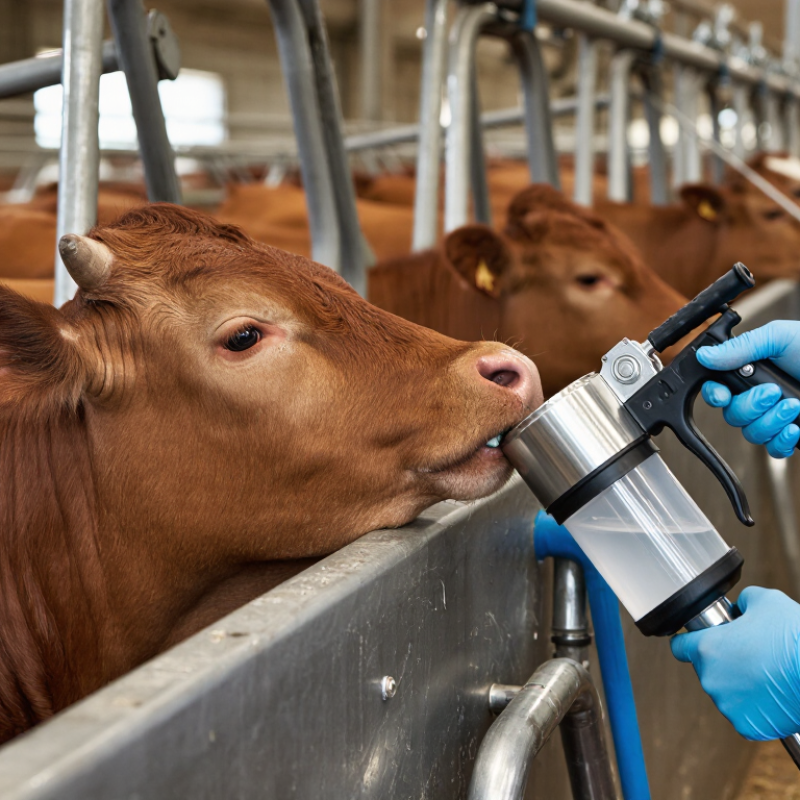
An automatic cattle injector is a reusable dosing tool designed to deliver a set volume of liquid medicine or vaccine with each trigger pull. Many models use a dose-adjustment mechanism and a refillable barrel or bottle connection. The operator selects the prescribed amount, places the needle correctly, and activates the trigger. This can make repeated treatments more consistent than drawing each dose by hand. It does not decide which product or dose an animal needs.
Small details matter. Tips: Check the dose setting against the product directions and your veterinarian’s instructions. Keep the injector clean, inspect the needle, and confirm the mechanism dispenses smoothly before use. Replace damaged parts; do not guess at a dose.
The tool is useful when several cattle need the same treatment, but it still requires careful handling. Restrain the animal securely and use an appropriate injection site and technique. A rushed trigger pull can cause an incomplete dose or poor placement. That is easy to overlook. Automatic does not mean error-proof, and dose accuracy can depend on maintenance, setup, and the operator’s technique. Follow the medicine label, and ask a veterinarian if the directions or dose are unclear.
| Aspect | Details | Practical Consideration |
|---|---|---|
| What it is | A reusable livestock syringe designed to deliver a measured dose each time the operator activates it. Many models draw liquid from a bottle through a tube. | Choose a syringe compatible with the product container, dose range, and injection method specified on the product label. |
| Common purpose | Administering repeated doses of injectable veterinary products, such as certain vaccines or medicines, to multiple cattle. | Only use a product by injection if its label or a veterinarian directs that route. Not every product is suitable for an automatic syringe. |
| How it measures a dose | The dose is set on the device, and the syringe delivers that volume with each completed activation. | Set and check the dose before use. Follow the product label for the correct dose; do not assume the same setting applies to every product or animal. |
| Typical workflow | Attach the appropriate needle and supply tube, prepare the syringe according to its instructions, set the dose, and administer each injection while cattle are safely restrained. | Keep the bottle and tubing clean, and use the injection site and technique specified by the product label or veterinarian. |
| Potential advantages | Can make repeated dosing more convenient and consistent during herd work than drawing each dose separately with a single-dose syringe. | It does not replace safe animal handling, correct restraint, accurate dosing, or appropriate injection technique. |
| Injection route | Depending on the product and equipment, injections may be subcutaneous or intramuscular. | Use only the route, site, needle, and technique stated on the product label or advised by a veterinarian. |
| Cleaning and care | The syringe and reusable components require cleaning and maintenance according to the device instructions. | Prevent contamination, especially when changing products. Do not mix medicines in the syringe unless specifically directed. |
| Safety and records | Needles are sharp, and injectable products may have handling requirements, withdrawal periods, or storage instructions. | Handle and dispose of needles safely. Follow label directions and keep treatment records, including product, date, dose, and treated animals. |
Important: The product label and veterinary guidance determine the correct dose, route, injection site, and withdrawal period. An automatic injector is a delivery tool, not a substitute for those instructions.
It delivers a measured dose through a needle when the trigger is pressed. Many models refill from a medicine bottle after each injection.
It is commonly used for vaccines and other prescribed treatments. Follow the medication label and veterinary guidance for the product, route, and dose.
A correctly set injector can make repeated dosing more consistent and reduce repeated syringe handling. That can help in a busy handling area. It is not a shortcut.
Check the dose setting, needle condition, and equipment cleanliness. Look for leaks or blockages, too. Small details matter.
Restrain each animal securely and use the site and technique recommended for the medication. Keep the injector pointed away from people. People still rush sometimes.
Clean it as directed, including the barrel, seals, and needle attachment. Store it dry and protected from dust. Keep medication under its stated storage conditions.
Stop and inspect the device rather than forcing the trigger. Check for a clogged needle, leak, or worn seal. If problems continue, ask a qualified professional to assess it.
Record treated animals and required follow-up. A simple log with dates and brief notes can reveal recurring equipment problems. It is easy to forget.
An Automatic Cattle Injector is a veterinary tool designed to deliver a measured dose of medicine or vaccine to cattle through an injection. Depending on its design, it may hold medication in a reservoir and dispense a consistent amount each time the device is activated. This can help make routine treatment more efficient, particularly when several animals need care. Veterinarians and trained livestock handlers may use injectors for vaccinations and other prescribed treatments, following the product instructions and professional guidance.
Using an injector can support accurate dosing and reduce the time animals spend being treated, but safe handling remains essential. Restrain cattle calmly, use the correct needle and dose, and follow recommended injection sites and hygiene practices. Clean and disinfect the equipment as directed, check it for wear or damage, and store it securely between uses. Careful maintenance and responsible handling help protect both animal welfare and the handler while keeping the device ready for future treatments.

 WANJIA