Choosing a Poultry Repeating Syringe in 2026 is less about finding the most features and more about matching the tool to your flock’s routine. A small backyard keeper may value easy cleaning and a comfortable grip. A larger operation may need a durable barrel, clear volume markings, and a mechanism that delivers consistent doses across repeated use. The details matter. A sticky trigger or hard-to-read scale can slow work and invite mistakes.
Look closely at dose range, adjustment accuracy, materials, and replacement-part availability. Check whether the syringe is designed for the product and route recommended by its manufacturer or your poultry veterinarian. Do not assume every model suits every medication or bird. Calibration matters. So does hygiene. A barrel that comes apart for cleaning may be more practical, but only if it can be reassembled correctly. Test the mechanism with clean water before use, and follow the product instructions for cleaning, storage, and maintenance.
Comfort deserves a real-world check. Hold the syringe as you would during a normal flock check; notice the trigger pressure and whether the markings remain visible in a dim coop. Small birds can make handling feel less straightforward than a product page suggests. I would compare specifications carefully, then admit one thing: the best choice may only become obvious after routine use. This guide explains what to assess, what questions to ask suppliers, and how to choose a Poultry Repeating Syringe that fits your setting without relying on guesswork.
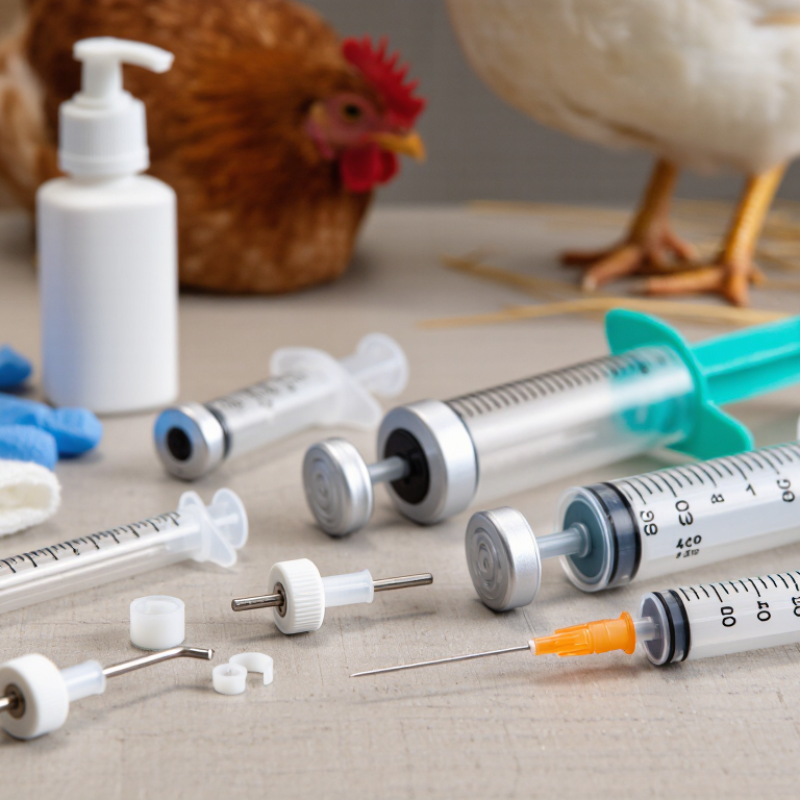
How to Choose a Poultry Repeating Syringe in 2026
Identify the Poultry Treatment Tasks the Syringe Must Handle
Start with the treatments the syringe will actually deliver. Note the expected dose range, number of birds, and whether doses vary between birds. A large flock may call for fewer refills, while small, changing doses need clear graduations and reliable adjustment. Check that the syringe is designed for the intended route, such as oral delivery or injection. These uses are not interchangeable. Follow product instructions and veterinary guidance for treatment and dosing.
Tips: Write down the smallest and largest intended doses before comparing syringes. Check the scale at eye level, and test the trigger with clean water. A sticky trigger slows the job.
Also consider how the syringe handles during a full treatment round. A secure grip and smooth repeat action can help reduce hand fatigue, especially when birds need individual attention. Look for parts that can be cleaned and maintained according to the manufacturer’s directions. Don’t assume a larger reservoir is better; it can feel bulky when working with small birds. I’d prioritize control over speed, though that trade-off deserves a real test with the gloves you use. Keep records of the device and follow veterinary advice if dosing or administration is unclear.
| Treatment Task | What the Task Involves | Syringe Features to Check | Practical Selection Check |
|---|---|---|---|
| Repeated individual injections | Delivering a measured dose to multiple birds in succession, using a product approved for injection and its specified route. | Adjustable dose setting, clear graduations, consistent dose delivery, and compatibility with the prescribed needle and product. | Confirm the required dose falls within the syringe’s usable range and that the setting can be checked easily during work. |
| Small-volume dosing | Administering a relatively small measured volume to an individual bird. The appropriate amount depends on the product directions and veterinary guidance. | Graduations fine enough for the intended dose, a mechanism that resets reliably, and minimal leakage or retained liquid. | Check that the scale is readable at the required setting; do not estimate a dose that the markings cannot measure reliably. |
| Higher-volume dosing | Giving a larger prescribed volume, where permitted by the product label and the bird’s treatment plan. | A suitable barrel capacity, secure connections, a comfortable grip, and a dose mechanism that remains consistent across repeated cycles. | Verify both the maximum capacity and the dose range. A larger barrel is not automatically suitable for small doses. |
| Long treatment sessions | Administering many individual doses during a flock treatment session, with repeated handling and refilling. | Easy refilling, a stable reservoir or feed arrangement, smooth trigger action, and components that can be cleaned as directed. | Consider refill frequency and operator comfort, while ensuring convenience does not compromise dose checks or handling hygiene. |
| Individual oral administration | Delivering a product by mouth when the product is intended for oral use and individual dosing is required. | A purpose-designed oral dosing applicator or suitable oral attachment; avoid using an injection needle for oral administration. | Confirm the applicator is intended for the product and route, and that its tip can be used safely for the bird being treated. |
| Eye, nasal, or other route-specific vaccination | Applying a vaccine by a specific route that may require drops, spray, or another dedicated application method. | A route-specific applicator with the correct delivery pattern. An injection repeater is not a substitute unless its instructions explicitly support that use. | Match the delivery device to the vaccine directions; route and application method are product-specific. |
| Medication through drinking water | Treating birds through a prepared water supply rather than dosing each bird individually. | A suitable water-medication dosing system or proportioner, selected for the treatment setup and product instructions. | A repeating injection syringe is generally not the equipment for dosing a flock water line; follow the product’s water-treatment directions. |
| Cleaning, calibration, and product changeover | Preparing equipment between sessions, checking delivered volume, and preventing residue or cross-contamination. | Accessible parts, materials compatible with approved cleaning procedures, clear calibration instructions, and replaceable wear components. | Check the manufacturer’s cleaning and calibration guidance, and keep separate or thoroughly clean equipment when treatment plans require it. |
Selection reminder: Confirm the treatment route, dose, bird type, and equipment requirements against the product label and veterinary instructions. A repeating syringe should be used only for applications its instructions support.
List the smallest and largest intended doses, flock size, and whether doses vary. Match the syringe to the prescribed route. Oral use and injection are not interchangeable.
Read the graduations at eye level and confirm the setting stays visible. Test delivered volume with a suitable measuring device. Small markings can be hard to read.
Not always. A larger reservoir may mean fewer refills, but it can feel bulky around small birds. Try the grip with your usual gloves.
A pickup tube keeps the container separate, which may ease handling during longer sessions. Bottle-mounted designs have fewer connections but can feel awkward as the container empties.
Look for kinks, trapped air, bubbles, and leaks. These can interrupt delivery. Check the seals before starting.
No. Refill design alone does not guarantee accuracy. Test the mechanism with the actual container setup and recheck settings after adjustments.
Test the trigger and grip with clean water. A sticky trigger or tiring grip matters. It probably will not improve during a full round.
Follow the manufacturer’s cleaning and maintenance directions. Check that parts come apart as intended, and keep records of the device. Don’t guess about dosing; ask a veterinarian when unsure.
Choosing a Poultry Repeating Syringe in 2026 starts with identifying the treatments it needs to support, how often it will be used, and the dose range required. Compare manual and repeating mechanisms for ease of operation, consistent delivery, and suitability for the task. Capacity and dose adjustment matter, but so do accuracy, comfortable handling, durable materials, and compatibility with the birds being treated.
Before selecting a model, consider safe use, cleaning, and maintenance. Check that the syringe can be disassembled or cleaned as needed, and follow its instructions alongside current veterinary guidance for treatment and dosing. Finally, balance features against workload and budget: a high-volume operation may benefit from a sturdy design that is simple to service, while occasional use may call for a more straightforward option. The best choice is one that delivers the required doses reliably and can be maintained consistently.

 WANJIA