A Vaccination Gun For Sheep is a hand-held tool designed to deliver measured doses of vaccine to multiple animals during flock work. Depending on the model, it may use a trigger, dose-setting mechanism, and reusable or replaceable components. The goal is steady dosing with less repeated handling of separate syringes. But it is not a shortcut around good technique. A poorly set dose or damaged needle can create problems, even when the tool feels simple.
Picture a clean handling area, a correctly labeled vaccine bottle, and sheep moving calmly through a race. The operator checks the product label, confirms the prescribed dose, and follows the equipment maker’s instructions for filling, adjustment, cleaning, and storage. Small details matter. Vaccine requirements vary by product, animal, and local veterinary guidance, so one setting should never be assumed suitable for every situation. Keep the device clean, inspect it for leaks or wear, and use needles appropriate to the product and task. A vaccination gun can support efficient flock management, but it does not guarantee accurate delivery by itself. Training, careful restraint, and observation of the animals remain essential. Even experienced handlers can miss a step when work gets rushed; that is worth admitting. This guide explains what the tool is, how its main parts work, and what to consider before using one. For health decisions or uncertainty about a vaccine, consult a veterinarian and the product label.
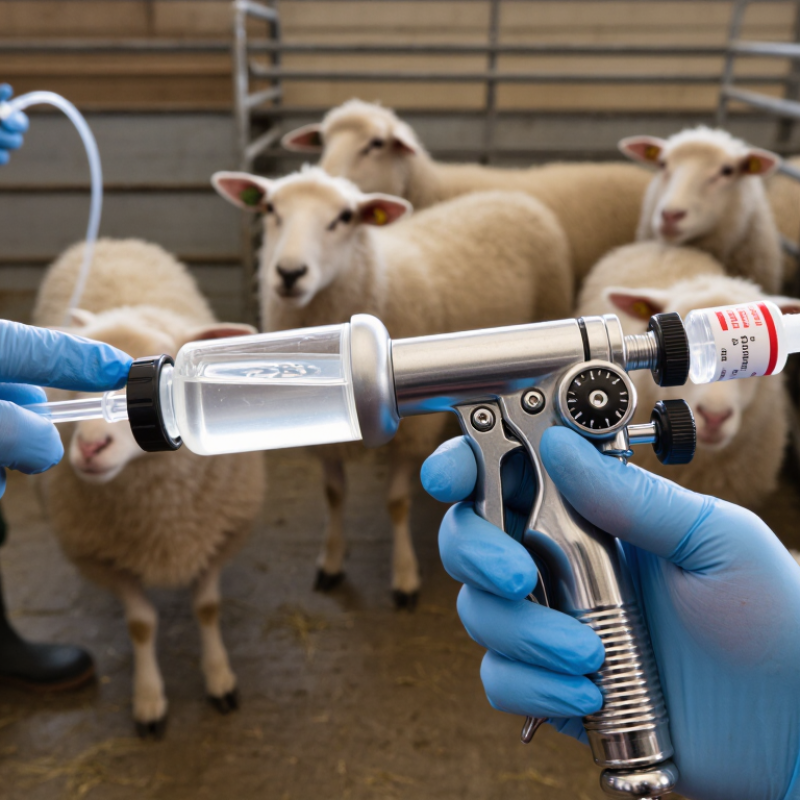
A sheep vaccination gun is a hand-operated injector designed to deliver a measured dose of vaccine. Many models connect to a vaccine bottle with a short tube, while others hold the liquid in a small barrel. When the handler squeezes the trigger, the mechanism draws and delivers a set volume through the needle. A dose dial or stopper helps keep each injection consistent. Small tool, precise task.
The gun does not decide which vaccine a sheep needs or where it should be injected. Those details depend on the vaccine instructions and advice from a veterinarian. Before use, check the dose setting, inspect the needle, and make sure the device is working smoothly. A few drops around the connection can signal a leak or loose fitting. During handling, steady restraint helps reduce sudden movement and missed injections. Even a well-adjusted gun cannot prevent every mistake; dose settings can shift, and needles can become dull. Clean and store the equipment as its instructions specify, and replace damaged parts promptly. The tool saves repeated syringe-filling, but it still needs careful hands.
A sheep vaccination gun is a reusable dosing syringe designed to deliver a measured amount of vaccine with each trigger pull. Its main parts are the vaccine reservoir, dose adjuster, handle, plunger mechanism, and needle assembly. On some models, a short tube connects the gun to a separate vaccine bottle; others hold vaccine in an attached barrel. Designs vary.
The reservoir stores the liquid, while the dose adjuster sets how much enters the syringe chamber. Squeezing the handle moves the plunger and pushes that dose through the needle. Small parts matter. A loose connection or worn seal can cause leaks or inconsistent dosing. The needle delivers the vaccine, so it should be clean, sharp, and suited to the product and injection method. Check the vaccine label and veterinary guidance for the correct dose and route.
Before use, inspect the barrel, tubing, seals, and needle for cracks, residue, or blockage. Prime the gun until liquid flows without air bubbles, then check that each trigger pull gives a consistent dose. That takes practice. Cleaning and storage instructions differ by product, so avoid assuming hot water or a particular disinfectant is safe. A quick visual check can miss a dosing problem; calibration and careful handling still matter.
A vaccination gun delivers a measured dose through a needle. This chart shows the general order of the parts involved in dose delivery; the exact design and layout vary between models.
A sheep vaccination gun delivers a measured dose through a needle, helping handlers give repeatable injections to a flock. Many models connect to a vaccine bottle with tubing; each trigger pull moves a plunger and fills the dose chamber. The next pull pushes that dose through the needle. Small details matter. The dose setting must match the vaccine instructions, since products can require different amounts and injection routes.
During use, keep the bottle upright and check that the tubing has no air leaks. Hold the sheep securely, part the wool, and place the needle at the site and angle specified for that vaccine. A quick, steady trigger pull helps deliver the full dose. Watch for leakage or a bent needle, and replace damaged parts. The gun does not make every injection identical; poor restraint, an empty bottle, or a blocked needle can affect delivery. Follow the product label and ask a veterinarian if the route or technique is unclear.
Tips: Before starting, test the dose into a clean container and confirm the volume. Keep needles clean, change them when dull or contaminated, and clean the equipment after use as directed. Avoid touching the needle to wool or dirty surfaces. I still find it easy to rush when sheep move, so pause and recheck the setting between bottles.
Before filling a sheep vaccination gun, read the vaccine label and match its route, dose, and storage instructions.
USDA NASS reported 5.05 million sheep and lambs in the United States on January 1, 2024, in its Sheep and Goats report. That national inventory is not a vaccination-use count, but it shows the scale of routine flock care.
Check the gun for cracks, clean it as directed, and confirm the dose against a calibrated measure. Prime it over a clean container. It is easy to mistake a smooth trigger pull for an accurate dose. Check anyway.
Restrain the sheep calmly, with its head and body supported. Part the fleece and place the needle only at the label-approved site and depth; the correct route may be subcutaneous or intramuscular.
Keep the needle sharp and clean, and replace it if it bends, becomes blunt, or is contaminated. Small details matter. Watch the dose indicator as you work, and pause if the plunger sticks or the animal moves suddenly. Do not force a dose.
Record the product, lot, date, and treated animals, then clean and store the equipment according to its instructions. A rushed setup can leave a missed dose; that possibility deserves an honest check before the flock moves on.
A sheep vaccination gun is a repeat-dose syringe designed to deliver measured vaccine doses with less manual refilling. It is commonly used for flock campaigns, including routine clostridial vaccination, when the product label permits that route. The USDA’s 2022 Census of Agriculture counted about 5.0 million sheep and lambs in the United States; FAOSTAT recorded roughly 1.3 billion sheep worldwide in 2022. These figures show why rapid dosing can matter in larger flocks. A handler can steady a sheep, tent the skin where appropriate, and trigger the syringe. The required route and site still depend on the vaccine.
Speed has limits. A poorly calibrated gun can repeatedly underdose or overdose; check its setting against the label and test delivery before starting. Air bubbles, leaking connections, blunt needles, and wool caught at the injection site can also interfere. Keep the vaccine within its specified temperature range, and change needles as directed by veterinary guidance. Some products require a different route or equipment, so a gun is not universal. It is tempting to equate fast work with accurate coverage. Don’t. Restraint, clean technique, and recording which animals were treated remain essential, especially when sheep shift in a race or lambs are small. An occasional missed dose is easy to overlook. The USDA census describes flock scale, not vaccination success; that distinction matters when judging the tool’s value.
It delivers a measured dose with each trigger pull. This can reduce repeated refilling during flock work.
Check the reservoir, tubing, seals, dose adjuster, handle, and needle. Look for cracks, residue, leaks, or blockages. Small parts matter.
Prime it until liquid flows without air bubbles, then test several trigger pulls. Compare the setting and dose with the vaccine label. A quick glance may miss a problem.
No. Some vaccines require a different route, site, or equipment. Follow the product label and veterinary guidance.
Use the dose and route specified for that vaccine. The correct site depends on the product and veterinary guidance.
Air bubbles, loose connections, worn seals, or a blunt needle can interfere. Wool caught at the injection site may also be a problem.
Keep it within its specified temperature range. Restrain each sheep carefully, and record which animals were treated. Speed alone is not accuracy.
Follow the equipment and vaccine instructions. Do not assume hot water or a particular disinfectant is suitable. I might overlook a detail, so check the instructions again.
A Vaccination Gun For Sheep is a purpose-built tool that helps deliver measured vaccine doses to multiple animals efficiently. It typically includes a vaccine reservoir, a dosing mechanism, a trigger, tubing or a connector, and a needle. Together, these parts draw vaccine from the reservoir and release a set amount when the trigger is operated. The dose setting should match the vaccine instructions and the needs of the animal; the gun does not determine the correct vaccine or dose on its own.
Before use, check that the equipment is clean, intact, correctly assembled, and set to the prescribed dose. Follow the vaccine label and advice from a veterinarian, handle sheep calmly, and use the recommended injection site and technique. Keep the device clean during work, monitor animals afterward, and clean and store the gun as directed. A vaccination gun can save time in a flock, but it requires careful handling and regular checks. It may be unsuitable for small groups, unusual dosing needs, or situations where the equipment cannot be kept clean and accurately calibrated.

WANJIA